
The 5 Types of Imposter Syndrome and How to Overcome Them
Imposter syndrome isn’t just self-doubt! It’s a persistent fear of being “found out” as a fraud, even when your accomplishments clearly show otherwise. These feelings often stem from unrealistic expectations, perfectionism, or comparison with others. While it may seem harmless, living with imposter syndrome can lead to burnout, anxiety, and even depression. But there’s hope! When you identify the types of imposter syndrome you’re dealing with, you can start to break free. Before diving into the specific types of imposter syndrome, it’s important to reflect on how these patterns might show up in your own life. Maybe you’ve noticed that you dismiss compliments or feel like you have to overwork to feel worthy. Recognizing these symptoms of imposter syndrome is the first step to regaining control and building self-confidence. Does the constant fear of being exposed fuel anxiety and burnout? Including talk therapy like CBT, can help you reframe your thoughts and build genuine self-assurance. Start Your Journey to Self-Acceptance 866.939.6292 The 5 Types of Imposter Syndrome Each type of imposter syndrome has its own patterns and challenges. Imposter syndrome was first identified in 1978 by psychologists Dr. Pauline R. Clance and Dr. Suzanne A. Imes in high-achieving women. Let’s explore them and how you can take back control. 1. The Perfectionist If you’re a perfectionist, nothing ever feels good enough. You might achieve success but focus only on the small flaws instead of celebrating your wins. Signs of the Perfectionist: Setting unrealistically high standards for yourself. Feeling like a failure for minor mistakes. Avoiding delegation because you believe others won’t meet your standards. When perfectionism takes over, it becomes difficult to appreciate your efforts or recognize your value. Overcoming It Shift your mindset to embrace progress, not perfection. Set achievable goals and celebrate small wins. Remember that mistakes are opportunities to learn. At Calusa Recovery, we help individuals find balance and recognize their worth, even when they feel trapped by perfectionism. 2. The Superhero Superheroes tie their self-worth to productivity, constantly taking on more responsibilities to prove their value. This leads to burnout and a never-ending cycle of “doing more.”Around 25% of people with imposter syndrome fall into the “Superhuman” category, feeling the need to perform better than everyone around them to prove their worth. Signs of the Superhero: Overworking to gain approval. Struggling to say no, even when overwhelmed. Feeling like you’ll never be enough, no matter how much you do. Overcoming It Learn to set boundaries and prioritize self-care. Understand that your value isn’t tied to how much you accomplish. Let yourself ask for help, and it’s a sign of strength, not weakness. You don’t have to do it all alone. With support, you can overcome these feelings and focus on what truly matters. 3. The Natural Genius Natural geniuses believe that everything should come effortlessly. When tasks require effort, they feel unqualified or inadequate. Signs of the Natural Genius Avoiding challenges that may expose your weaknesses. Comparing your progress to others’ immediate success. Feeling ashamed when you don’t excel on the first try. Struggling is part of growth, and no one becomes an expert overnight. Overcoming It Embrace the process of learning, even if it’s messy. Value persistence over innate talent. Celebrate small improvements to build confidence. 4. The Soloist Soloists believe they need to handle everything on their own. Asking for help feels like admitting defeat. Signs of the Soloist Hesitating to seek advice or collaborate. Believing success only counts if achieved independently. Feeling like a failure for needing support. Overcoming It Recognize that teamwork enhances success. Practice seeking help and valuing feedback. Build a trusted support network for encouragement. At Calusa Recovery, we remind you that needing help doesn’t make you weak—it makes you human. 5. The Expert Experts feel they must master every detail before starting a task. This leads to over-preparation and missed opportunities. Signs of the Expert Avoiding roles or tasks you don’t feel fully prepared for. Downplaying achievements by focusing on gaps in your knowledge. Constantly seeking certifications to validate your worth. Overcoming It Focus on what you already know and take action. Accept that learning on the go is natural. Trust your existing skills and expertise. How to Manage Imposter Syndrome Understanding the types of imposter syndrome is just the beginning. To truly move forward, it’s essential to adopt strategies that help manage these feelings and foster confidence. Living with imposter syndrome can feel isolating, but there are practical steps you can take to reclaim your self-worth. The following strategies are a good starting point: Practice Self-Compassion: Treat yourself with kindness, not criticism. Challenge Negative Thoughts: Replace “I’m not good enough” with “I’m learning and improving.” Seek Therapy: Professional help can provide tools to reframe your mindset. Celebrate Achievements: Take time to reflect on what you’ve accomplished. 80% of people report that having a mentor helped them overcome feelings of imposter syndrome, especially in professional settings. At Calusa Recovery, we believe in helping you build confidence by addressing these challenges holistically. Taking action, even small steps is crucial. Remember, your doubts do not define you. With the right support, you can overcome these feelings and thrive. Your Journey to a Brighter Tomorrow At Calusa Recovery, we empower you to overcome addiction and mental health challenges with personalized treatments that help you reclaim a healthier, fulfilling life Help Me Transform My Life Conclusion: Reclaim Your Confidence The types of imposter syndrome may differ, but their impact can feel equally overwhelming. Whether you resonate with the perfectionist, superhero, or any other type, these feelings don’t have to control your life. You have the power to overcome self-doubt and embrace your true potential. At Calusa Recovery, we understand how the types of imposter syndrome can affect your mental health and self-esteem. Our compassionate and personalized approach can help you navigate these challenges, empowering you to rebuild your confidence and live a fulfilling life. Take the first step toward a brighter future today. Let us help you rediscover your worth and reclaim
10 Common Symptoms of Imposter Syndrome and How to Recognize Them
Is imposter syndrome robbing you of the joy in your accomplishments? With offered compassionate and effective treatment plans, potentially including medication and therapy like CBT, to help you overcome self-doubt and finally believe in yourself! Reach for Confidence 866.939.6292 Have you ever gone through this feeling that you are not good enough, even when everyone around you praises your achievements? Maybe you lie awake at night, worried that one day, people will “find out” you are not as capable as they think. If this sounds familiar, you’re not alone. These feelings are common for those struggling with imposter syndrome symptoms, a condition that leaves you doubting your worth despite your successes. At Calusa Recovery, we truly understand how exhausting this can be. The weight of self-doubt, the fear of being exposed as a “fraud,” and the constant pressure to prove yourself can take a toll on your emotional well-being. With a decade of experience, we have helped individuals just like you rediscover their confidence and take back control of their lives. Our compassionate and personalized approach means we meet you where you are and work with you to overcome these challenges step by step. In this article, we will go through recognizing the imposter syndrome symptoms that might be holding you back. More importantly, it’s here to remind you that healing is possible and support is within reach. So, let’s take this first step together. What Is Imposter Syndrome? Imposter syndrome is a deep-rooted belief that your achievements aren’t truly earned. You may feel like you have just been lucky or that you have somehow tricked others into thinking you are capable. People with imposter syndrome often live with a constant fear of being ‘exposed’ as frauds, even when there’s clear evidence of their success. Imposter syndrome is prevalent among high achievers, with studies indicating that up to 82% of individuals experience these feelings at some point in their lives. These feelings can affect anyone, whether you are a student, a professional, or someone balancing multiple roles. The good news is that imposter syndrome symptoms are not permanent; they are something you can overcome with the right support and tools. 10 Common Imposter Syndrome Symptoms Identifying imposter syndrome symptoms is the first step toward managing. Here are the most common signs: Self-Doubt: Constantly doubting your ability and value, especially when other people compliment you. Perfectionism: Settling for perfection in all aspects of life and experiencing failure whenever you do not measure up to this. Fear of Failure: Don’t take on a difficult or risky project due to fear of failure. Downplaying Achievements: Thinking that your success has come as a result of luck, good timing, or assistance from someone else. Overworking: Even though the desire to show how hardworking and valuable you are by taking on more responsibilities and working overtime. Fear of Exposure: The ongoing fear of people finding out that you are not as competent as they presume you to be. Comparing Yourself to Others: Comparing yourself with others and ending up feeling like you are subpar in some way. Inability to Accept Compliments: Be hesitant when someone appreciates you and offers sincere congratulations. Procrastination: Procrastinating on tasks because you fear they will not turn out the way you want them to. Constant Anxiety: Suffering from constant fear and anxiety that asserts an individual is not suitable for a specific task. Often, the symptoms accumulate on top of each other and one is unable to find a way out of it. But knowing them is the first step—it arms you with the knowledge to get assistance and begin the process. How Imposter Syndrome Symptoms Affect Your Life Suffering from imposter syndrome might feel like constantly pushing a small yet heavy boulder uphill. Imposter syndrome prevalence rates range considerably from 9 to 82%, depending on the screening method and threshold used. Rates are especially high among ethnic minority groups. It doesn’t just affect how you feel about yourself—it impacts your entire life: At work, you are likely to turn down a new challenge since you cannot handle the risk of failure. In relationships, you may not be able to trust or communicate openly due to feeling unworthy of it. At an individual level, one might struggle with constant stress and anxiety, which are likely to leave one exhausted emotionally. The longer one harbors such feelings, the more convoluted they may become, often making it difficult to solve them. But they don’t define you. With adequate encouragement, one is able to begin to acknowledge oneself in the same manner as one is perceived by others, as competent and worthy. How to know that you have Imposter Syndrome Symptoms The key to managing imposter syndrome is the ability to identify the condition in your life. Ask yourself: Am I lucky, and therefore, I am reaping what I have sown? Does it make me competitive and make me think that I am a loser and not measuring up to the mark? Is it fear that others will discover that I am not as capable as they have assessed me to be? Can I belittle the praise and the positive reactions I receive from other people? If you answered ‘yes’ to these questions, you might be suffering from imposter syndrome. They should be received with kindness, of course, since we are all imperfect and making mistakes is part of being human. You are not defective in any way, and you do not require any kind of ‘repair.’ It’s normal to feel this way, and you just need help to manage through them. According to the International Journal of Behavioral Science, imposter syndrome symptoms can lead to higher rates of anxiety and depression, with 40% of those affected reporting significant struggles with stress and mental health issues. How to Eliminate The Feeling of Being a Fraud It is essential to clearly understand that it is impossible to leave behind imposter syndrome symptoms without any effort, but it is possible if …. Acknowledge
How to Stop Being a People Pleaser: Say No Without Guilt
Are you the kind of person who constantly agrees when your inner self is telling you to reject the request? Constant self-sacrifice may seem like a virtuous thing to do, but in reality, you may find yourself exhausted, burnt out, and not responsible for your own well-being. As a Calusa Recovery for the purpose, we appreciate that, in some moments, it is hard to attend to the needs of several other people as well as oneself. We’re here to guide you through the journey of setting boundaries, reclaiming your time, and learning how to stop being a people pleaser—without guilt. So the next time you fail to say NO to someone to avoid displeasing them, do not conclude that you are a coward or you have a character defect. It simply implies that you are compassionate, that you are concerned with others’ welfare, and that, ladies and gentlemen, is magnificent. However, what many people fail to recognize is that care often poses a threat to their mental well-being, and that’s when change is needed most. Believe us—we have helped many people like you change their lives for the better and can do the same for you. Are you constantly saying “yes” while your inner voice screams “no”? Don’t let people-pleasing drain your well-being any longer. Just as anxiety therapy can help regain control Reclaim Your “Yes” with Our Help 866.939.6292 What Do You Understand by the Term People Pleaser? People pleaser is not a phenomenon of being kind or courteous, but it is a behavioral attribute where you tend to put other people’s welfare first, even if it is to your own detriment. This may stem from being helpful, but it would drain a person emotionally. It can make a person feel lost and feel like they are not themselves anymore. This means you agree to things so as not to offend or disappoint others, even if it goes against what you really want or can do. Though this might appear normal and healthy at the initial stages, this could prove terrible for mental health and may ruin relationships. Here are some common challenges faced by people-pleasers: Wondering why one has to do something if it is not going to be returned in kind. Self-sacrifice or the lack of personal focus. Lacking the ability to let go or say no, even though one may realize that he or she has too much to do. Freeing yourself from people-pleasing tendencies is not simply about being able to decline; it is also about regaining your identity. In this manner, when you treat the cause, you can create constructively more appropriate and reciprocal boundaries that foster healthier relationships. If you experience such features in yourself, you must understand that they can be altered. Identifying these cycles is the beginning of healing and moving toward a healthier life. Why is it Difficult for Individuals to Decline Requests? It may sound so simple, but it is one of the hardest things to do, especially for a person who has always been programming themselves to agree with everything that others say. Thus, the struggle for many people is conditioned by the emotional factor and social pressure. The pain of no is not about rejecting a request but rather about dealing with uncomfortable emotions that follow rejection. 70% of people-pleasers report fear of rejection as the primary reason for their behavior, often stemming from childhood experiences of conditional acceptance. Here are some of the common reasons people struggle to say no: Fear of Rejection: Fearing that people will stay away from them or avoid them. Guilt: Thinking that if you say no, then you are a selfish or uncaring individual. Seeking Validation: Perceiving that one’s value is tied to the opinions of other people. Such reasons tend to have emotional components and are, therefore, difficult to alter on your own. But you can begin transforming your way of thinking and gaining confidence with the help of self-encouragement. Saying no can often be a hard thing to do, especially when you know it will involve turning down a friend or loved one. Unfortunately, it is not just about saying no to some demands—it is also about saying yes to oneself and its principles. If you are able to defeat these challenges then you will come to realize that no is not only good for relationships and your mental health. Steps to Stop Being a People Pleaser Learning how to stop being a people pleaser doesn’t happen overnight, but small, consistent changes can lead to big results. 65% of individuals who grew up in households with high parental expectations developed people-pleasing tendencies to gain approval and avoid conflict. Here’s how you can start: 1. Recognize the Signs It is important to note that people-pleasing often happens in the medium. Pay attention to behaviors like: To avoid confrontation when you should be declining an offer. Suffering from guilt or anxiety when one cannot extend a hand to help the other. It entails overworking and reaching a point where you feel exhausted or used up. By recognizing these patterns, you know where to concentrate your energy. 2. Create the Right Boundaries for You It’s important to state that the word is not a wall but a bridge to better relationships. People should begin by setting tiny goals, such as reducing the amount of time spent on unfulfilling tasks. Do not be scared when expressing what you want; be frank and open. Do not overexert yourself and realize that turning down is acceptable. One must learn to set these boundaries for the sake of one’s mental health and to show respect to others. 3. Reframe Your Perspective This is not being selfish but practicing the art of protecting oneself from becoming overwhelmed. When you are feeling tempted to neglect your own needs, remember that everyone will be better off when your needs are met. Remember that it’s impossible for true relationships to fail simply because of a no. In certain cases,
What Is a People Pleaser and How Does It Affect Your Life?
Have you ever found yourself agreeing to the plans that you don’t want? Just to avoid disappointing someone? Or saying “yes” to the tasks for which you barely have the time or energy? Many people fall into the habit of saying “yes” to the request that they don’t want to fulfill, going above and beyond for others while neglecting their own needs. This isn’t just about being kind of thoughtful; it’s a pattern that can deeply affect your mental and emotional well-being. This behavior has a name: people pleaser. While it may stem from good intentions, constantly prioritizing others over yourself can lead to burnout, anxiety, and a loss of personal identity. If this sounds familiar, you need not worry. Understanding “what is a people pleaser?” is the first step toward regaining balance in your life. In this article, we will unpack the signs, effects, and causes of people-pleasing and share practical steps to help you regain control. Your happiness matters, too, and it’s time to start putting yourself first. Does the fear of disappointing others keep you stuck in a cycle of self-sacrifice? Similar to how anxiety treatment helps regain control, Calusa Recovery provides a path to setting boundaries and prioritizing your well-being. Rediscover You with Calusa 866.939.6292 What is a People Pleaser? As such, it is critical to go deeper into the understanding of what a people pleaser is all about. A people pleaser is a person who puts other people before them, so they ignore their own needs and feelings. Such actions usually stem from a desire to be accepted liked, or to avoid confrontation. In a 2022 survey, 49% of U.S. adults identified as people-pleasers, with women (56%) more likely than men (42%) to self-identify this way. Characteristics of a People Pleaser Before diving into how this behavior affects your life, let’s break down the common traits of someone who fits the description of what is a people pleaser: They always apologize too much for issues they hardly have any control over or which cannot in any way affect them. Perpetually trying to win the approval of other people. Experiencing discomfort or shame when trying to say ‘no.’ Molding themselves to fit the requirements of other people and neglecting their own needs. They will go to great lengths to avoid confrontation, even if it means trashing their own well-being. These traits can guide you in determining whether or not you meet this definition of what is a people pleaser. Now, let us examine how this alters various segments of your experience. Are You a People Pleaser and How Does it Impact Your Life? When we talk about what is a people pleaser, then there are certain repercussions that come along with it in terms of an emotional, social as well as professional life. Even if they give you a sense of fulfillment by assisting others, they pile up in the long run. Chronic people-pleasing can increase cortisol levels, which, over time, can lead to physical health problems such as heart disease and a 30% increased risk of depression. Emotional Impact Higher stress levels, anxiety, and burnout rates. Lack of acknowledgment or recognition.” Lack of ability to appreciate oneself outside the context of comforting others. Part of comprehending what a people pleaser is also incorporates comprehending how the behavior can detrimentally impact your self-esteem. Social and Professional Fallout Being very busy to the point of taking up numerous activities that make you have no time for yourself. It is difficult to deny oneself from provoking too much work even when one is overwhelmed. The social pressure of forgetting one’s identity by trying to assume the roles others want one to take. These effects are experienced by people who might be asking themselves what is a people pleaser. Why Do People Become People Pleasers? To fully understand what is a people pleaser, it’s helpful to know the root causes. People-pleasing behavior often stems from signs of childhood trauma, shaping how individuals perceive their self-worth and relationships: Studies show that 45% of people pleasers reported experiencing critical parenting styles during childhood, which conditioned them to seek validation from others. The possibility of being rejected or being associated with being selfish. It makes you have a poor opinion of yourself and that your worth is tied to other people’s happiness. When asking the question, what is a people pleaser, most often, it is associated with the circumstances that influenced your values of worth and belonging. How to Change People-Pleasing Behavior The first step in stopping people from pleasing others is being aware of your behavior. Answering the question of what a people pleaser is can be a start to understanding the problem and making the necessary changes in their behavior. Strategies for Change in Practice Here’s how you can start transforming your habits: Set BoundariesIt is critical to know what one is willing to do and then be realistic about it. Practice Self-CareWhat are some things that you look forward to doing and that make you happy and relaxed? Learn to Say “No”Start with small steps by saying no to activities that make you lose your energy needlessly. Seek SupportIf you feel the need to please others, seeking a therapy or counseling session could help you discover why you feel this way. Celebrate ProgressTake note of every breakthrough you have as you find your groove again in life. By understanding what is a people pleaser and by implementing the above-stated measures, one will be able to regain their time and focus on affairs that are significant to them. By following these strategies, you will gradually notice a shift in your thought process and perception of your needs and relationships, ultimately learning how to stop being a people pleaser. Your Journey to a Brighter Tomorrow At Calusa Recovery, we empower you to overcome addiction and mental health challenges with personalized treatments that help you reclaim a healthier, fulfilling life Help Me Transform My Life Conclusion: Ready to take the first
Paranoia from Weed: Why It Happens and How to Manage It
Have you ever felt your heart race uncontrollably, your thoughts spiral, or an overwhelming sense of fear after using marijuana? You are not alone. Paranoia from weed is a common experience for many, leaving them anxious and unsure of what’s happening. While it’s unsettling, understanding the causes and learning ways to manage it can make all the difference. Whether you’ve experienced this once or multiple times, it’s essential to understand why it happens and how to regain a sense of peace. THC, the active compound in marijuana, plays a major role, but other factors like your mindset and environment can intensify the effects. At Calusa Recovery, we help individuals navigate these challenges with care and proven strategies for overcoming them. By addressing Paranoia from weed, you can regain control of your mental health and enjoy a healthier relationship with your mind and body. Let’s dive into what causes this reaction and how you can manage it effectively. Does the fear of paranoia prevent you from enjoying marijuana, or worse, cause significant distress? Similar to how marijuana addiction treatment addresses the root causes, get the provided therapies like CBT and MET to help you manage anxiety and build a healthier relationship with your mind. Your comfort is a priority 866.939.6292 What Is Paranoia from Weed? Paranoia from weed refers to feelings of intense fear or suspicion that are not rooted in reality. These feelings are commonly caused by the ingredient in marijuana known as THC, which influences one’s emotions and the areas of the brain that control the feeling of fear. Those with this form of paranoia may perceive people around them as judging them, spying on them, or something dreadful is looming. Understanding these feelings as a result of marijuana use and not the actual state of things is also helpful in the process. According to a study published in Psychopharmacology, up to 30% of cannabis users report experiencing anxiety and paranoia as side effects of THC, especially when using high doses. Why Does Paranoia from Weed Happen? The causes of paranoia from weed are associated with the effects that THC has on one’s mind. Knowing possible causes can help one avoid conditions or deal with this reaction in the future. Research from the Journal of Clinical Psychiatry found that 70% of individuals with a predisposition to mental health disorders, like anxiety or schizophrenia, are more likely to experience paranoia from weed after using marijuana. Here are some reasons why it happens: Increased THC Levels: When taking high doses, THC overstimulates receptors in the brain and is likely to cause and enhance feelings of fear. Brain Chemistry: THC impacts the emotions related to fear, as the amygdala is responsible for that. Existing Anxiety: The use of marijuana is not advisable as it worsens feelings of anxiety if one already experiences anxiety. Set and Setting: The state and environment of the mind determine how you are going to behave each time you use marijuana. Paranoia is scary to feel, but it is reassuring to know what triggers it; thus, we should try to minimize it. Signs of Paranoia from Weed Recognizing the signs of paranoia from weed can help you identify and address the issue early. Symptoms can include: Physical Symptoms: Racing heartbeat Sweaty palms Trembling or shaking Mental Symptoms: The apprehensiveness to be observed or evaluated Overwhelming sense of doom Unwanted and bizarre ideas When suffering from all these symptoms, one should not forget that they are only temporary and can be controlled. A study found that CBD strains reduce anxiety and paranoia in approximately 50% of users when combined with THC, especially when consumed in moderate amounts. Once the symptoms have been noted, measures can be taken to ensure that they do not worsen. Sometimes, all it takes is a calming and positive attitude from a comrade to help them get through the tough times. Prevention and Management of Paranoia From Weed Use Reducing paranoia from weed means taking steps that decrease the impact on you and help you regain control. The measures that you employ in the present and the long term can greatly minimize its prevalence. Immediate Steps When paranoia strikes, these quick actions can help: Take Deep Breaths: Shallow and slow breathing can help you to clear your mind and reduce tension in your body. Change Your Environment: Relocate the conversation to a less noisy and more relaxing location. Drink Water: Drinking water is also recommended to help your body metabolize THC. Sometimes, such reactions make things worse, but taking those immediate actions usually reduces the severity of the paranoid feelings and helps calm down. Long-term Approaches Over time, these strategies can help reduce your chances of experiencing paranoia from weed: Use Lower THC Strains: Use a strain rich in CBD. Anticipate less THC to prevent paranoia. Start Small: To learn your tolerance, you need to reduce the amount of the product in your system so that you can gradually increase it. Seek Support: It is always advisable to seek the assistance of a professional when you experience ongoing symptoms. Having both short-term and long-term strategies to address the problem ensures that one has laid stronger ground to address the issue of marijuana-induced paranoia. You May Read: OCD and Paranoia, Drug-induced Psychosis When to Seek Professional Help If paranoia from weed becomes a constant problem, then it’s high time to go and consult a professional. This kind of paranoia might suggest the user’s sensitivity to THC or pervasive mental health issues that a person should address with a therapist. If you are reaching out for help, it does not mean that you are weak; instead, it must mean that you want to be strong and find out why you are feeling this way. Professional care means that plans and strategies are developed according to individual needs to regain control. How Calusa Recovery Can Help At Calusa Recovery, we work with clients to address dependency on specific substances and often co-occurring mental disorders. If paranoia from weed
OCD and Paranoia: Understanding the Overlap and Differences
Living life with OCD and paranoia can feel like you are carrying an invisible weight that no one else sees. It’s exhausting, isolating, and sometimes even frustrating. These two conditions, while distinct, share certain traits that can blur the lines between them. For someone struggling, the overlap might feel like a maze with no clear exit. But here’s the good news: understanding the unique characteristics of OCD and Paranoia is the first step toward regaining control. Knowledge can be empowering, and by recognizing how these conditions differ and connect, you are already paving the way for healing. You can resurface! The weight of OCD and paranoia can feel crushing, but you don’t have to carry it alone; break free today with treatments like CBT and MAT. Your freedom is one step away. healing starts NOW 866.939.6292 Let’s Know How OCD and Paranoia Overlap While they are different conditions, OCD and paranoia can share certain similarities, which might make it harder to tell them apart: Intrusive thoughts: Persistent, unwelcome ideas or fears can feel overwhelming. Heightened anxiety: Both conditions often come with intense worry that disrupts daily life. Stranded trust: Whether it’s mistrusting others or doubting oneself, relationships can suffer. These shared traits are why professional guidance is essential in identifying and addressing each condition appropriately. What is OCD and Paranoia? OCD stands for Obsessive-Compulsive Disorder. It is characterized by persistent, unwanted thoughts and repetitive behaviors that the individual feels compelled to perform to reduce anxiety. People with OCD may have intrusive thoughts about harm, contamination, or orderliness. OCD affects about 1.2% of the population globally, and it often begins in childhood or adolescence. Individuals with OCD experience distressing thoughts and compulsive behaviors that can significantly impact daily life. Paranoia, on the other hand, is an irrational fear and persistent feeling of being persecuted or watched. Individuals with paranoia may believe that others are plotting against them or trying to harm them, even when there is no evidence to support those beliefs. Research shows that paranoia often involves distorted thinking about threats or harm that are unlikely or unfounded. Studies show that individuals with paranoid thoughts often exhibit an increased sense of mistrust and social withdrawal. While both conditions involve intense fear, they differ in their focus. OCD and Paranoia may overlap in the sense that both can create a distorted perception of reality, but they stem from different psychological processes. Why do OCD and Paranoia Matter? When OCD and paranoia occur together, it can create a cycle of doubt and fear. Understanding both helps you to break this cycle and reclaim your peace of mind. It’s important to acknowledge the emotional toll these conditions can take, especially if left untreated. In the face of overwhelming anxiety and suspicion, it may feel like there’s no way out. Both OCD and paranoia are linked to heightened anxiety and distress, and without proper treatment, they can lead to significant impairments in social and occupational functioning. However, with the right treatment and support, OCD and paranoia can be managed. Healing is possible, and that’s where understanding both disorders plays a crucial role. It’s not just about coping, it is about lasting recovery. Core Principle of Managing OCD and Paranoia Support system A strong support system is essential when dealing with OCD and paranoia. Whether it’s friends, family, or professionals, having someone to lean on can make a huge difference. Therapy and counseling can also offer invaluable guidance as you navigate your recovery. Friends and Family: Emotional support and understanding. Therapists and Counselors: Professional guidance to address both disorders. Resilience and Healthy Habits Building resilience is a cornerstone of recovery. Maintaining a healthy routine, like regular exercise and balanced nutrition, helps keep the mind and body strong. Establishing a sense of structure can combat the chaos that OCD and paranoia can bring to daily life. Exercise: Release endorphins, which help fight anxiety. Routine: Provide a sense of control and stability. Mental and Emotional Balance Both mental and emotional aspects are crucial, especially for people with OCD and paranoia. Self-focused awareness, cognitive-behavioral self-administered therapy, and relaxation procedures will restore order in the mind. Mindfulness: Helps you to remain present and focused. CBT: Cognitive-behavioral therapy (CBT) has been found to be one of the most effective treatments for both OCD and paranoia. CBT helps individuals recognize and challenge distorted thought patterns, reducing symptoms over time. Ways in which OCD and paranoia can be tackled Setting Achievable Goals Recovery of a place or an economy, therefore, is not something that can be achieved within a short span of time. Any type of progress in the management of both is possible if you set tiny goals that are easy to accomplish. For each of the instances, cutting down the number of compulsions or learning to trust people again is an important step. Small Wins: It is also essential to note that one should manage to document and rejoice in victories halfway through the process, too. Goal-Setting: Focus on one thing at a time. Embrace Self-Care Evaluating and caring for one’s mental health is a very important aspect to consider. These principles include sleep patterns, proper dieting, and some relaxing activities that will assist you to be more grounded and prepared to contain stress. Sleep: Crucial for controlling the feelings and emotions in any given context. Nutrition: Proper nutrition contributes significantly to the improved function of the brain. Professional Help It is also important to understand that sometimes people cannot cope with problems on their own. When OCD and paranoia are significantly getting in the way of life, going for therapy is life-altering. Help from professionals offers techniques on how to diminish symptoms within the shortest time possible, and this helps those involved to recover in a disciplined environment. Therapy: CBT and exposure therapy are helpful in both cases. Medication: Some cases benefit from antidepressant or antipsychotic drugs. Overcoming Challenges in the Recovery Journey It is also important to know that recovery from OCD and paranoia is a process
Can Depression Lead to Self-Sabotage? Understanding the Connection
Feeling like you are stuck in a battle with your mind? You aren’t alone! Depression isn’t just about feeling sad; it’s about feeling trapped in a cycle that makes even simple tasks feel overwhelming. But here’s the twist: sometimes, depression doesn’t just slow you down, it can make you work against yourself. Can depression be self-sabotaging? Yes, it can! And that’s one of its sneakiest tricks. It pushes you to avoid opportunities, doubt yourself, and even walk away from the things you want most. The good thing is that, recognizing this pattern is the first step to breaking it. In this article, we will see the link between depression and self-sabotage, show you how to spot it, and offer simple, effective ways to overcome it. If you have been feeling like your own worst enemy lately, keep reading; it’s time to change that. It’s time to stop being your own worst enemy! With proven treatments like antidepressants, therapy, and CBT, you can start overcoming self-sabotage today. I Define Me 866.939.6292 Can Depression Be Self-Sabotaging? Self-sabotage is when you actively block yourself from reaching personal objectives that you have set and are fully aware of what good things come out of such objectives. For instance, in the case of someone suffering from depression, it stems out to be an automatic response at times and can be classified as an unconscious act. It is the feeling of wanting to succeed in something, but without knowing it, you feel as though you are the reason why you aren’t succeeding. A study found that 63.3% of psychiatric inpatients reported engaging in at least one medically self-sabotaging behavior, with an average of 4.11 different behaviors per individual. Can depression be self-sabotaging? Yes, most definitely yes. The behavioral response in people begins to alter, and as a result, every scenario seems complicated and difficult to view as a solution. If you have been feeling depressed, then your sense of self may be quite low, which can make it seem like you do not ‘earn’ happiness or success. This way of thinking leads to a lot of actions that ultimately backfire, such as: Never be on the lookout for potential changes that will help, such as considering career transitions. Delaying work that is supposed to be done regardless of how many times one tries to accomplish it Putting distance between yourself and the people close to you or mistreating people who want to help Being unsure of themselves and eventually never acting on those instincts All of the above can make you feel like you are in an endless loop, where every time you gain the willpower to reflect on any action you wish to accomplish as an outcome, there are constant thoughts telling you that you don’t deserve it in the first place. But the answer to the question, can depression be self-sabotaging, can be overcome with sufficient attention and optimism. How Depression Triggers Self-Sabotage Depression does not only affect your mood or functioning; it also pertains to the thoughts you have, the decisions you make, and what you choose to do. Depression is a valid cause to believe that struggling is pointless, which can have significant consequences in one’s life. This can lead to more harm in the long run. Individuals with borderline personality disorder, often associated with depression, frequently engage in medically self-sabotaging behaviors, including intentional self-harm and neglecting necessary medical treatment. Some common ways depression leads to self-sabotage include: Negative Thoughts: Negativity tends to be a default state for depressed people and gets hard to control in day-to-day life. Tryouts may be associated with failure because of a belief that there is little to no chance for things to improve. Hence, one may never attempt it. Lack of Energy: The feeling of lethargy is one of the most common and troublesome symptoms of depression. This lack of motivation can be a huge obstacle to achieving success as one would rather delay their tasks instead. Low Self-Esteem: Depression always introduces a strong feeling of inadequacy in an individual, which then makes the person believe that they are unworthy of achieving anything in life. This is in contrast with how beneficial such accomplishments can be for them, leading them to even self-sabotage. Avoidance of responsibilities: Due to depression, an individual might become incapable of performing even the simplest of daily life activities. This delay tolerance then leads to the accumulation of unfinished work, which only makes the situation worse. Emotional eating or substance abuse: Depression can lead to habits such as alcoholism or overeating. These disorders tend to serve as a way of helping cope with depression. However, this just comes with a bigger headache down the line. Can depression be self-sabotaging?: Yes. Most of the time, depression reduces the will of an individual, and as a consequence, a number of self-destructive patterns in behavior begin to form, but understanding self-destructive methods of behavior is the first step to getting better. How to Break the Cycle of Self-Sabotage If you’ve been asking, can depression be self-sabotaging? The answer is yes, but you can break the cycle. Here are some ways to start overcoming self-sabotage caused by depression. Seek support: One of the steps that I consider one of my best practices is to ask for help. A well-wishing person or a specialist can assist in encouraging a person to look beyond the negativity out there. Set small goals: It is not always easy to set a plan and focus on trying to achieve it all at the same time. Hence, it is best to take large goals and set smaller segments to work towards. Celebrate small wins and gain the courage to work on the larger goal. Challenge negative thoughts: Negative thoughts come in real-time, and one can easily try and get up with them. And whenever a negative thought arises, resist it and change the scenery. Ask questions like “Is this thought reasonable?” or “What’s my evidence for this thought?” and get ready
Why We Self-Sabotage Relationships and How to Heal
It feels like you’re stuck in a constant tug-of-war with yourself! That’s what self-sabotaging relationships are all about. You long for closeness, yet push it away when it gets too real. Have you ever found yourself backing away from someone who genuinely cares about you? Or creating unnecessary drama just to avoid facing the real issue? You are not alone. We understand this painful pattern is more common than you think, and this is the time to break the silence! If you’ve ever wondered why you seem to repeat the same destructive relationship habits, it’s time to uncover the truth. It’s not about wanting to push people away. It’s often about fear, past hurt, or simply not knowing how to trust what’s right in front of you. In the article, let’s get to know and understand why we self-sabotage relationships, how it impacts our emotional health, and, most importantly, how we can stop the cycle and start building better, more fulfilling connections. The sooner you understand the ‘why,’ the sooner you can change the ‘how.’ Let’s get started! Tired of repeating destructive relationship habits, watching good things slip away? Including therapies like CBT and mindfulness, to help you break free and build healthier patterns. Your chance for real connection starts now. Stop the Panic Now 866.939.6292 What are Self-Sabotaging Relationships? A self-sabotaging relationship is when you intentionally or unintentionally create problems that harm or end relationships. This could include behaviors like pushing people away, doubting your partner’s feelings, or avoiding intimacy. It often happens when someone is afraid of being hurt or rejected and replaced. Some key signs of self-sabotaging relationships include: Creating unnecessary drama or conflict. Avoiding vulnerability or intimacy Overthinking everything Pushing away people who care about you Constantly worrying that the relationship will fail Why Do We Self-Sabotage Relationships? Knowing the reasons behind self-sabotaging relationships is important for healing. There are several factors that can lead to these patterns, often rooted in past experience, fear, or emotional wounds. Self-sabotaging behavior in relationships is often linked to attachment styles formed during childhood, especially insecure attachment. People with anxious or avoidant attachment styles may struggle with trust, intimacy, and communication in relationships, leading to self-sabotaging behaviors. Fear of Vulnerability One of the biggest reasons people self-sabotaging relationships is a fear of being vulnerable. Opening up to someone else means giving them the power to hurt you. If you’ve been hurt in the past, this fear can be overwhelming, causing you to push people away before they have the chance to hurt you. Low Self-Esteem People with low self-esteem may struggle with self-sabotaging relationships due to low self-worth, which can be extremely frustrating precisely because of this behavior. Such individuals may leave or push their partners away out of fear of being rejected or humiliated. The partner feels neglected, which in turn only adds to the sense of rejection and emotional distress. Past Trauma Some might resort to such self-destructive habits due to past traumas caused by a breakup or an abusive relationship. Your past traumas can influence your decision-making in such a way that a person can preemptively dismiss the likelihood of that pain acting in their future relationships. The Impact of Self-Sabotaging Relationships Self-sabotaging relationships can take a heavy toll on your emotional well-being. Devastating experiences can result in recurrent affairs, broken hearts, and unwanted fights, which can increase your stress levels, leave you disoriented, and force you into isolation. This also raises the question of emotional and physical pain. Why is it that every affection you share results in strife rather than joy? Trust issues and fear of vulnerability are major consequences of self-sabotage in relationships. People who self-sabotage may push away their partners as a defense mechanism to avoid potential rejection or emotional pain. This form of trauma is difficult to heal from, with the possibility of being shredded into pieces each time an altercation occurs. Losing the possibility of everlasting relationships can mold one into a person who is constantly overstressed and tries to break free from a life full of disappointments and a lack of growth. How to Heal from Self-Sabotaging Relationships Healing from self-sabotaging relationships requires patience, self-reflection, and a willingness to change. It’s not an easy process, but it is possible with the right steps and support. Here are some ways to begin healing: Assume Responsibility For Your Problems The first step in healing is acknowledging that you may be self-sabotaging in relationships. The process of healing is to acknowledge that there may be situations where you find it easier to distance yourself from people. Self-reflection is an important factor and an absolute must. Do you, for instance, have issues with people for no apparent reason? Do you create problems or question whether someone loves you? These are very dangerous practices, and the first step to reversing the situation is to accept that these practices are bad. Assess Your Fears Fear of vulnerability, rejection, and past trauma are often at the root of self-sabotaging relationships. Where is that fear coming from? Why does it exist? Reflection can assist you in that regard. Learning how to trust people bit by bit will be made simple once one understands their fears. Gain More Respect For Yourself Low self-esteem is a major contributor to self-sabotaging relationships. Improving on that includes things like self-care, being around positive people, and setting clear goals. Getting support from people who are loving and respectful will, in turn, assist in improving one’s self-efficacy. By doing this, you are less inclined to alienate people, especially loved ones. Effective Communication One of the easy ways to avert self-sabotage is by open and frank conversations with your partner. Verbally communicate with your partner about your fears rather than assuming that problems will occur. Being straightforward will, in turn, increase intimacy and increase trust in the relationship. You May Read: Can Depression Lead to Self-Sabotage? Seek Professional Support You are not alone if you’re trying to break away from self-sabotaging relationships that fuel unhealthy
Panic Attack vs. Heart Attack: How To Tell the Difference
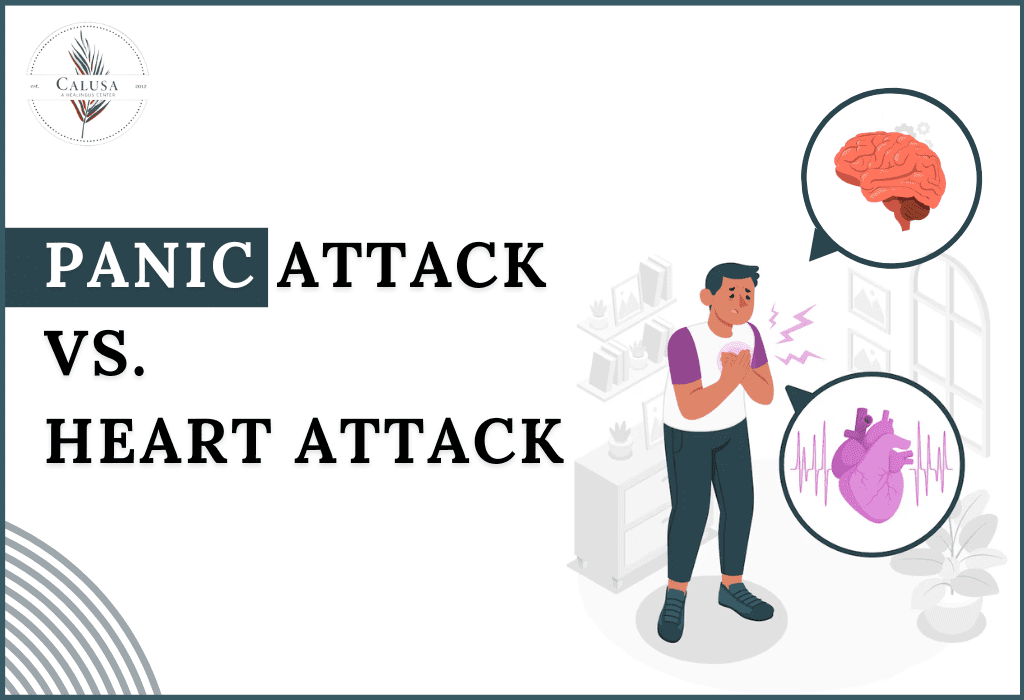
Chest tightness? Shortness of breath? Heart pounding like a drum? Is it a panic attack vs heart attack? We know how scary that feels! In moments like these, fear is easy to take over. Both conditions share similar symptoms, but one is life-threatening. If you know the difference, it can help you stay calm, feel safe, and get the right help when you need it most. The good news? You do not have to struggle it out alone! We understand how overwhelming it is when your body feels out of control. This article will guide you through everything you need to know about the signs, symptoms, and differences between a panic attack vs heart attack so that you can feel more prepared, more secure, and more aware. You deserve to feel safe, even in moments of uncertainty! You Deserve More Than Just Survival! With our individualized care and scientifically-backed treatment methods, you can find lasting relief that goes beyond just managing the symptoms. My peace of mind is worth it! 866.939.6292 What is a Panic Attack? A panic attack is just like a tornado inside your body and mind. It can hit from nowhere, flooding you with intense fear and physical symptoms that feel very real. Many people think they are having a heart attack, but panic attacks are caused by anxiety, stress, or fear, not heart problems. Approximately 2.7% of the U.S. population suffers from panic disorder, which causes recurrent panic attacks. These episodes can be distressing but are not life-threatening, unlike heart attacks. Let’s Know the Symptoms of a Panic Attack Chest pain (sharp, stabbing, but not heart-related) Fast heartbeat (it feels like your heart is racing) Shortness of breath (like you can’t catch your breath) Sweating (your body may feel hot and clammy) Dizziness(you may feel lightheaded or faint) Tingling sensations (pins and needles, often in the neck, hands, or face) Nausea (you might feel sick to your stomach) These symptoms can peak in 10-30 minutes but may feel like forever. Panic attacks are intense, but they aren’t dangerous. The feeling will pass, even if it doesn’t feel like it in the moment. After the Panic attack, it’s common to feel drained, shaky, or emotionally exhausted. This is your body’s way of ”calming down” after the sudden flood of stress hormones. What is Heart Attack? Heart attack is not at all like a storm, and it is more than something way more serious! It happens when blood flow to your heart is blocked, and it is a medical emergency. Unlike a panic attack, this is a life-or-death situation that requires urgent care. Symptoms of a Heart Attack : Severe chest pain (pressure, squeezing, or tightness) Pain that spreads (to the arms, back, neck, or jaw) Shortness of breath (even when resting) Cold sweats (not from heart or activity) Nausea or vomiting (more common in women) Dizziness or fainting (due to low blood flow) These symptoms don’t go away on their own. If you feel them, please don’t wait any longer! Call emergency services right away! Acting fast can save your precious life. Heart disease remains the leading cause of death in the U.S., responsible for over 700,000 deaths each year. This highlights the importance of identifying the signs of a heart attack promptly and seeking immediate medical help. In a panic attack vs heart attack comparison, the heart attack symptoms are more persistent and need medical attention. If you experience these symptoms, call emergency services immediately. Key Difference Between panic attack vs heart attack It is difficult to tell the difference between panic attack vs heart attack when you are in the moment. Both situations cause chest pain, breathing difficulty, and other unsettling symptoms. But there are key differences you can look for: How they Differ: Pain Location: In a panic attack vs heart attack, the pain from heart attack often radiates from the chest to the arms, back, neck, or jaw. In contrast, in panic attacks, pain usually stays in the chest. More than 50% of heart attack patients experience chest pain. Cause: A panic attack vs heart attack comparison shows that panic attacks are driven by anxiety, while heart attacks are caused by blocked arteries in the heart. Relief: The symptoms of a panic attack can often be eased with breathing techniques, whereas a heart attack will not improve without emergency care. Duration: A panic attack vs heart attack typically lasts for 10-30 minutes, while a heart attack can last much longer and requires immediate medical attention. Recognizing these differences can make all the difference. If you suspect you are suffering from a heart attack, call 911 right away. It is better to be safe than sorry! What Should You Do During a panic attack vs heart attack? If you are wondering what to do during a panic attack vs heart attack, it’s important to stay calm and make the right decisions. Here is what you can do during Panic Attacks Take slow, deep breaths Ground Yourself Talk to yourself Panic attack vs heart attack is overwhelming, but these techniques help reduce anxiety and bring you back to calm. What to do during a heart attack Call emergency services immediately. Do not wait! Chew aspirin (if not allergic) to thin your blood and improve circulation Stay still: Sit or lie down while you wait for medical help. In a panic attack vs heart attack condition, always call for medical assistance if you suspect you are having a heart attack. Time is critical. Why Does Knowing the Difference Between Panic Attacks vs Heart Attacks Matter? Knowing the difference between panic attack vs heart attack could save your life. Understanding what to look for allows you to act quickly and get the right help at the right time. Here’s why it matters: Immediate action: A heart attack requires urgent care, while a panic attack can often be managed with breathing exercises. Peace of mind: Recognizing the signs of a panic attack can help you avoid unnecessary
Grounding Techniques to Stop a Panic Attack in Its Tracks
Panic Attacks can make you feel like everything is spinning out of control. My heart races, my breath shortens, and it feels like danger is everywhere! But hey, we have good news: it’s the grounding techniques for panic attacks that can help you get back to feeling yourself, feel calm, and stay present in the moment. These techniques are simple, effective, and can be done anywhere. If you have been searching for ways to stop panic attacks, this article will walk you through some of the most effective grounding techniques. You will learn how they work and how you can use them to feel calm during high-stress moments. What if you could live free from the overwhelming grip of panic? Our team is here to help you find long-term peace and healing through proven therapies, such as Cognitive Behavioral Therapy (CBT) and Medication-Assisted Treatment (MAT). Path To a Healthier, Calmer Tomorrow. 866.939.6292 What Are The Grounding Techniques for Panic Attacks? Grounding Techniques for Panic Attacks are simple methods that help you reconnect with the present moment. During a panic attack, your mind often shifts into “Black or White” mode, making it hard to decide. Grounding brings your attention back to your body and surroundings, helping you feel safe and in control. 95% of People with Panic Attacks Report Feeling Out of Control Grounding techniques for panic attacks aim to restore a sense of control, which is crucial since about 95% of people experiencing panic attacks report feeling as though they have lost control of their body or mind. These techniques use your five senses, sight, sound, smell, taste, and touch, to bring you back to reality. When you engage your senses, your brain is forced to shift focus from the panic to the present moment. Here are the key benefits of Grounding Techniques for Panic Attacks Quick and simple to use Work in any location Help reduce panic symptoms fast By implementing these techniques, you can create your safe mental space, “Pause,” and break free from the intense emotion caused by panic attacks. Why Does a Panic Attack Happen? Panic happens when your body’s stress response goes into overdrive. It’s like an alarm system going off when there’s no danger. This can happen for many reasons, like: Stressful situations Anxiety disorder Trauma or past experiences Physical health issues Your brain triggers the “flight or fight” response, releasing adrenaline, which causes rapid heartbeats, fast breathing, and a sense of fear. While panic attacks can feel frightening, Grounding Techniques for Panic Attacks will help you calm yourself, your body, and your mind. Simple Grounding Techniques for Panic Attacks When you are in the middle of a panic attack, these Grounding Techniques for Panic Attacks will make you sane and bring you back to the present. Each one uses your senses or mind to refocus your attention on the moment. The 5-4-3-2-1 Technique This is one of the most well-known Grounding Techniques for Panic Attacks. It works by helping you focus on your senses. Research shows that using grounding methods, like deep breathing or sensory exercises, can significantly reduce anxiety symptoms within 20-30 minutes. This rapid relief makes it a go-to method for those in distress Five things that you can see – Look around and name five things you see. Four things you can feel – Focus on the texture of objects around you that could be your clothes, bottle, chair, or even the floor. Three things you can hear – Pay attention to background noises (Birds, fans, people talking, TV, or distant music) Two things that you can smell – Notice any scents around you (food, flowers, or fresh air) One thing you can taste – Focus on any taste in your mouth (Gum, water, or snacks) These methods are great because they work fast and keep you grounded in reality. Deep Breathing Exercise Controlling your breathing is one of the most powerful ways to calm your nervous system. Panic attacks often make you breathe fast and shallow, but slow, deep breathing can reverse this. Inhale for Four seconds Hold your breath for four seconds Exhale for six seconds Repeat this pattern three times or more, and you will already start feeling better! Body Scan The body scan is a mental technique for checking in with your body. Close your eyes and focus on each part of your body, from head to toe. Notice how your head feels. Move your attention to your neck and shoulder, relax them Keep moving down, focusing on each part of your body. You could also do it while doing the deep breathing exercise. This technique helps you feel connected to your body and brings you closer to yourself. Counting Backwards Counting backward gives your mind something to focus on. You can start from 100 and countdown slowly. If 100 feels too high, you can choose any number, like 50 or even 20. The goal is to concentrate on the numbers fully, and it will distract you from panic. Holding a Cold Object The sudden shock of cold can snap you out of a panic attack. Grab an ice cube, splash cold water on your face, or hold a cold drink. This sensation sends a signal to your brain to shift focus. Name Colors Around You Every color deserves a description – clothes, objects, or nature around you; take a second and name them all. Diversifying your attention by naming colors helps keep the power of panic further away. Use Positive Affirmations Reframe your thinking and prevent panic from attacking your mind by believing, for instance: “At the moment, I don’t feel threatened.” “The immediacy of this feeling is temporary.” “I run the show.” When someone deals with irrational fears on a purely motivational level, the shakiness of panic appeases overpowers in this way. How to Choose the Best Grounding Technique for You Not every grounding technique works for everyone, so it’s important to find what feels right for you. Begin experimenting with various methods,