

Trauma triggers are powerful emotional and psychological events that trigger memories, feelings, or physical sensations associated with a traumatic event. Trauma triggers can be visual, auditory, tactile, or a combination of all of the above. A traumatic event can be triggered by a specific situation. So how to deal with, trauma triggers help people who have experienced a traumatic event to control their emotions and reactions.
Your Healing Begins with Understanding Your Triggers!
You Deserve a Fresh Start. With the right support, therapy, and coping strategies, you can take back control and start healing now.
Learn to Address Your Triggers Today!
866.939.6292
What causes brain trauma and triggers?
Brain trauma can be triggered by a variety of things, including physical injury, accidents, and even emotional abuse. Traumatic events can have long-lasting effects on the brain, resulting in changes in brain function. These changes can increase a person’s susceptibility to triggers, making the brain more sensitive to certain triggers related to the traumatic event.
What is the impact of trauma triggers on mental health?
Trauma triggers have a big impact on your mental health. Especially if you have PTSD or complex PTSD, trauma triggers can cause you to feel scared, anxious, or have panic attacks. Trauma triggers can also cause you to feel powerless, emotionally numb, or even disconnected from reality. Understanding how trauma triggers affect your mental health and seeking help is important.
What are the types of Trauma Triggers and how to deal with it?
To deal with trauma triggers is different for everyone, but there are some triggers that most people experience.
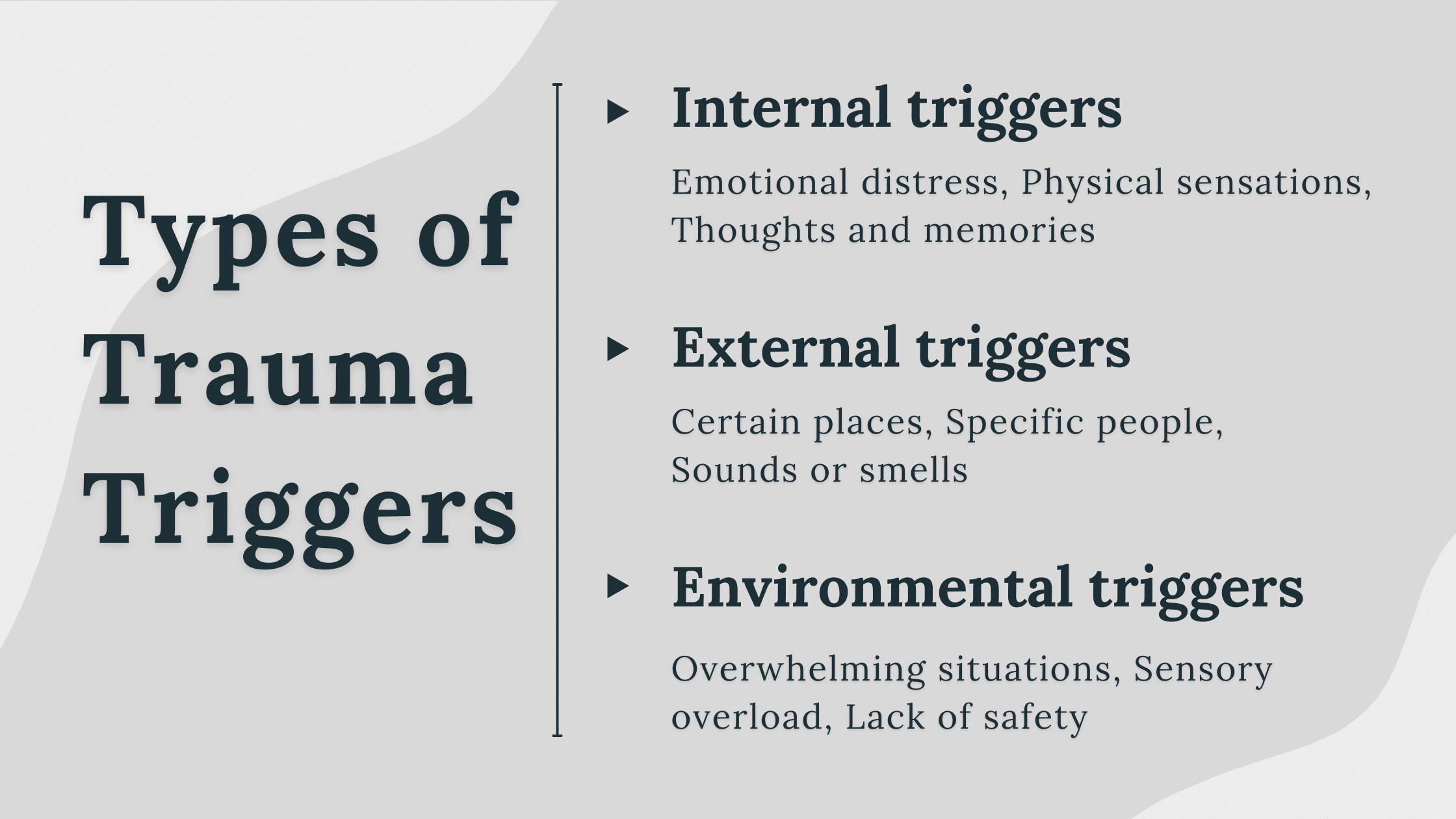
There are two main kinds of triggers: internal and external.
1. Internal triggers
These are things that happen in the body that can cause PTSD. These can be things like thoughts, emotions, or even physical sensations like your heart racing or your palms sweating.
- feelings of anger or anxiety
- feeling abandoned, lonely, or vulnerable
- feelings of frustration or sadness
- memories
- pain, or muscle tension
2. External triggers
These are things that happen outside of your immediate surroundings. These things, people, or places can trigger PTSD symptoms and bring back traumatic memories.
3. Environmental triggers
These are places, things, or situations we associate with the traumatic experience. For instance, a survivor of a car accident may be triggered by driving or being near the accident site.
What is Post-traumatic stress disorder (PTSD) and triggers?
PTSD is a condition that develops after you or someone you know has experienced or witnessed a traumatic event. People with PTSD often have intrusive thoughts, nightmares, or flashbacks associated with the traumatic event. The intrusive thoughts, nightmares, and flashbacks can be triggered by a variety of things, including specific sounds, smells, or situations that remind you of the traumatic event.
What is Complex PTSD and its Triggers
Complex PTSD is a form of PTSD that is triggered by long-term and repetitive trauma, usually in a relationship or social setting. Complex PTSD trauma may also be triggered by specific words, actions, or people that remind you of your abuser or traumatic event. Understanding and recognizing these triggers is essential for managing complex PTSD.
What are the symptoms of Complex PTSD?
The signs and symptoms of complex PTSD vary and can come in many forms. Some of the most common signs include:
- Emotional Dysregulation: People with severe PTSD may experience intense and ever-changing emotions, such as anger, sadness, or fear, which can be overwhelming.
- Distorted self-perception: People with severe PTSD often have negative thoughts about themselves, think they’re not good enough, don’t deserve love, or are fundamentally flawed.
- Difficulty maintaining relationships: People with severe PTSD often struggle with trust and intimacy. They may have difficulty forming close relationships or establishing healthy boundaries in their relationships.
- Hypervigilance: One of the most common symptoms of complex PTSD is an increased state of alertness and heightened awareness of potential threats. This heightened awareness can lead to feelings of fatigue and feelings of being on edge all the time.
- Dissociation: Dissociative episodes are when a person feels disconnected from their environment or their own body. Dissociative episodes are common in people with severe PTSD.
What are the causes and risk factors of Complex PTSD?
The most common cause of complex PTSD is long-term exposure to a traumatic event. Complex PTSD can be caused by a variety of factors, such as the intensity and severity of the trauma, the age and stage of development of the individual at the time of trauma, and other risk factors. Common risk factors for developing complex PTSD include:
- Childhood Abuse: Child abuse, including physical, emotional, and sexual abuse, increases the risk of complex PTSD.
- Domestic Violence: Due to the long-term nature of the trauma, complex PTSD is a condition that can develop in people who have experienced repeated acts of domestic violence, whether as children or adults.
- Hostage Situation: Hostage or hostage situations can cause complex PTSD because people are exposed to long-term trauma and a loss of control.
What are the Treatment options for Complex PTSD?
Treating complex PTSD requires a comprehensive and individualized approach. The goal of treatment is to address the underlying trauma, manage symptoms, and promote healing and recovery. Some common treatment options for complex PTSD include:
- Trauma-Focused Therapy: Different types of therapy, including EMDR and PRT, can help people work through and heal from trauma.
- Cognitive-behavioral therapy: CBT can help you recognize and challenge your PTSD-related negative thinking patterns and beliefs, helping you to develop healthier coping strategies and behaviors.
- Medication: In some cases, medications may be prescribed to treat specific symptoms of severe PTSD, including depression, anxiety, and sleep issues.
- Other Therapies: In addition to traditional treatments, complementary therapies like yoga, meditation, and art therapy can be a great addition to your treatment plan, giving you more tools to heal and express yourself.
What are some of the therapy approaches for Complex PTSD?
Several therapeutic paradigms have been proven to work in the treatment of complex PTSD. Some of these paradigms go beyond conventional therapies and address some of the unique issues that people with complex PTSD face.
- Dialectical Behavior Therapy: DBT combines CBT components with mindfulness practices to help people manage their emotions, learn healthy coping techniques, and strengthen relationships.
- Sensorimotor Psychotherapy: This therapy focuses on the connection between the mind and the body to help the individual process traumatic experiences and feelings stored in the body to support internal healing.
- Schema Therapy: Schema Therapy focuses on the beliefs and patterns that are formed as a result of long-term PTSD. The goal is to replace negative schemas with positive ones.
How to identify and recognize your triggers to deal with trauma?
If you deal with trauma triggers, one of the first things you need to do is figure out what triggers them. It’s important to take a step back and think about what triggers you. Think about the people, situations, or things that consistently make you sad or bring back bad memories. Keep track of these triggers in a journal and keep an eye out for any patterns. Once you figure out what your triggers are, you can start to figure out how to deal with trauma triggers.
How to identify a trigger?
Sometimes, it’s easy to figure out what a trigger is and start to plan. But sometimes, our triggers can be a bit more subtle and unexpected. Knowing what a trigger is is the first step in learning how to manage it.
These triggers are unpredictable, but we can identify them. We can connect things that happen to us, people we love, or even things we see that make us feel something or change our way of thinking. There are a few different ways of doing this.
If you’re having a panic attack, you can start by writing down what you’re thinking, feeling, and feeling. Here are some ideas to help you out:
- What did you hear?
- What did you see?
- What did you smell?
- How were you feeling?
Once you’ve got that sorted out, you can start connecting the dots and noticing patterns to help you figure out what your triggers are.
In 2013, Trusted Source conducted a study in which they asked 46 people who had experienced trauma to write down all the bad memories they had. Over a few days, they wrote down 294 bad memories. Most of the people weren’t even aware of what was causing the bad memories.
If you think you might be dealing with some kind of trauma triggers. It’s a good idea to talk to a mental health professional. They can help you understand what might be causing your symptoms and give you an outside perspective on how you’re feeling. They can also help you figure out why your reactions are the way they are.
Coping Strategies that help to deal with triggers from Trauma
Once you’ve figured out what your triggers are, it’s important to come up with ways to deal with them. Here are a few tips that might help:
- Deep Breathing and Grounding Techniques: When you’re feeling down, try to focus on your breathing and do some grounding exercises to bring you back to the present. For instance, you could count your breaths or focus on feeling your feet on the floor.
- Self-Care Practice: Try to do things that help you relax and take care of yourself, like meditating, doing yoga, or soaking in a hot tub. Doing these things can help ease some of the stress and anxiety you might be feeling from triggers.
- Seeking Support: Make sure you talk to someone you can trust, like a friend, family member, or therapist, who can offer you emotional support and advice. Talking about your feelings and triggers can help reduce their impact and give you a sense of relief.
What are the medications for PTSD Triggers?
Some medications, such as SSRIs, can treat depression and anxiety, and they can also address symptoms of PTSD.
SSRIs that are commonly prescribed include:
Doctors can prescribe Effexor, also known as Venlafaxine, as a medication for PTSD. It’s a type of medication that blocks the release of serotonin and dopamine.
How to seek professional help to deal with trauma triggers?
While coping techniques can help you manage triggers, it’s important to get professional help if your triggers are having a significant impact on your day-to-day life and your overall mental health. A therapist or counselor can tailor specialized treatment and support to your individual needs. They’ll help you identify the source of your triggers, create coping strategies, and work toward healing and peace of mind.
Support systems for managing triggers
In addition to professional support, a support system is necessary to manage triggers from trauma. You need to surround yourself with people who can relate to and support you. You can join support groups or online support communities. Where you can share your experiences with others who have experienced similar trauma. A support system can be a safe place to express your feelings, gain knowledge, and get support during difficult times.
How to treat Trauma?
Trauma affects the brain in many different ways. So it’s important to seek professional help to understand the full range of effects. A mental health provider can recommend treatment options, such as:
- Trauma-focused CBT: Trauma-focused CBT is a type of cognitive behavioral therapy (CBT) that addresses the psychological and emotional health of people who have gone through trauma and are working to overcome the negative effects of their past.
- EMDR: EMDR is a type of psychotherapy that uses specific eye movements to help you process a traumatic event from your past. Through EMDR, you can restore positive pathways in your mind, allowing you to develop more resilient coping strategies that can help protect you from negative thought processes.
- Tension and trauma-resolving exercises (TREs) are basic exercises designed to relieve stress and tension in our body, reducing the impact of trauma-related symptoms.
Examples of PTSD Triggers
The triggers of PTSD can vary greatly depending on a person’s traumatic history. Below are some of the most common triggers:
- Loud Noises: For people who have been in a firefight or been a victim of a crime. Loud noises like fireworks, sirens, or shots fired can cause strong emotional and physical responses.
- Certain Smells: Whether it’s smoke inhalation, chemical exposure, or fragrance, the smell of the traumatic event can trigger memories and feelings.
- Specific Locations: Whether it’s a hospital, an accident scene, or a room in your home. Being in a space that reminds you of your traumatic experience can trigger a range of negative feelings and recollections.
Your Journey to a Brighter Tomorrow
At Calusa Recovery, we empower you to overcome addiction and mental health challenges with personalized treatments that help you reclaim a healthier, fulfilling life
Help Me Transform My Life
Conclusion
Trauma triggers can be difficult to deal with, but they can also help you find peace within yourself. Understanding trauma triggers, recognizing and addressing them, creating coping skills, seeking professional support, and building a support network can help you on your path to healing. Remember that you’re not alone and there’s help out there. If you or someone you know is struggling with trauma triggers, please reach out to a helpline or consider contacting Calusa Recovery Treatment Center in Florida.